Q&A: 6 Questions with Christina Holt
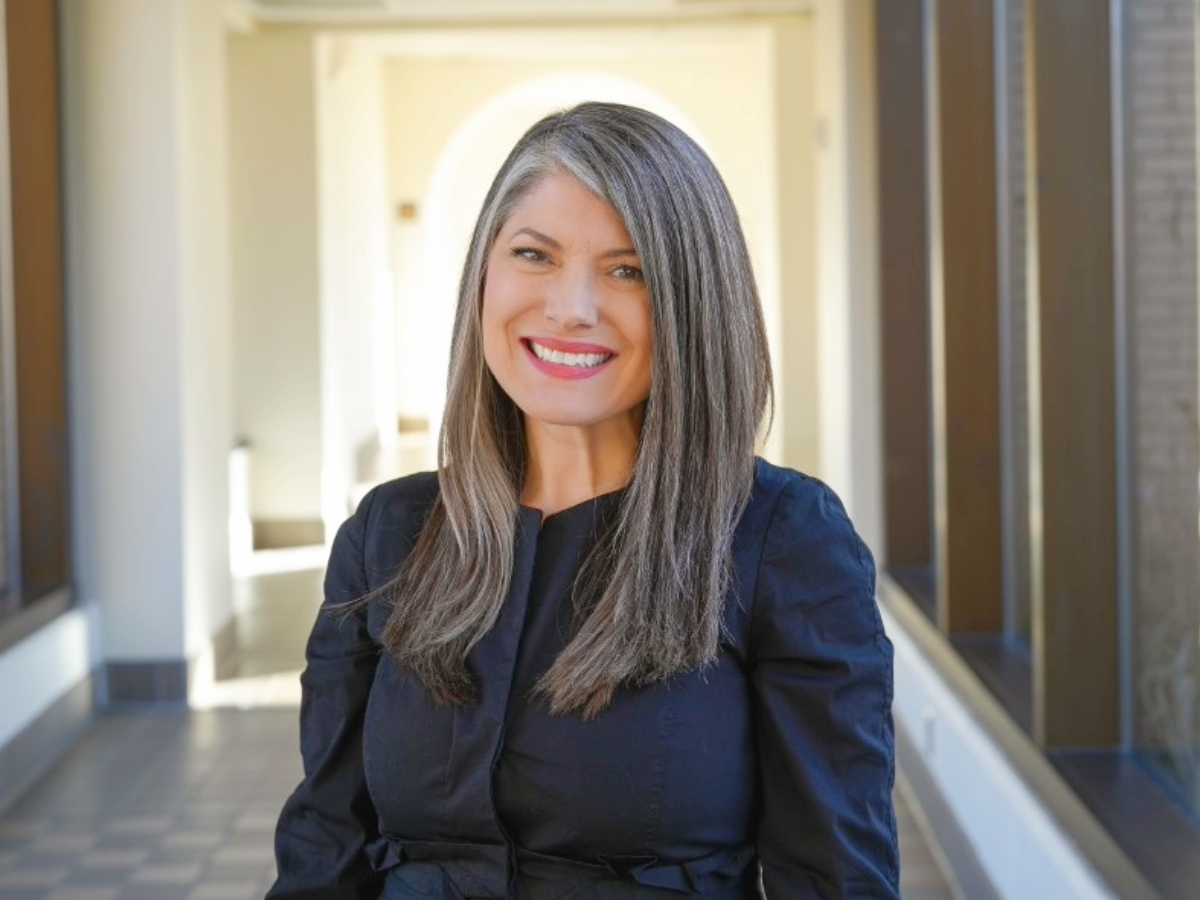
Christina Holt is Interim Director of the Center for Community Health and Development at the KU Life Span Institute. She earned her master's degree in Human Development (Child and Developmental Psychology) from the University of Kansas and specializes in capacity building for community improvement and supporting evaluation of collaborative efforts.
Tell us about your role at the Life Span Institute.
I serve as the interim director at the Center for Community Health and Development, where I support a range of initiatives aimed at strengthening community capacity. I direct the Community Tool Box, an online resource that equips community change makers with practical guidance for improving local conditions. I also contribute to projects focused on sexual violence prevention, maternal and child health, and equitable economic mobility.
What are you most proud of in your work?
The Community Tool Box has grown over 30 years to include thousands of pages of freely accessible information. It has been translated and culturally adapted in Spanish, and many resources are available in Farsi and Arabic. Hearing from people around the world who use the Tool Box to advance public and community health is deeply rewarding. Working with the Peace Corps to integrate the Community Tool Box into their efforts with volunteers and communities in Africa was a highlight, as is supporting the World Health Organization in their global capacity-building efforts supporting community engagement.
I am also deeply moved by the work of our local partnerships, including the collective impact work with the Ewing Marion Kauffman Foundation in Kansas City, which supports improving equitable economic mobility through college access and completion, workforce and career development, and entrepreneurship—areas aligned with our mission and critical to so many other issues we care about. The Kauffman Foundation's engagement with us was driven by the impact of the Community Tool Box.
I am likewise passionate about supporting partners working to prevent sexual and domestic violence. These teams collaborate within their communities to strengthen protective factors—things like safe and healthy built environments, fostering positive social norms, and expanding access to safe and affordable housing. Their dedication and leadership continue to inspire me.
What prepared you to do this work?
I learned from passionate colleagues committed to understanding the conditions under which communities succeed in creating meaningful change. Their work shaped my approach to helping groups establish the supports needed for effective action.
Mentorship has played a significant role. Stephen Fawcett, my undergraduate and graduate advisor, continues to be a guiding influence for me nearly 30 years later. I am grateful for colleagues such as Jerry Schultz, Jomella Watson-Thompson, retiring director Vincent Francisco, and former research colleagues including Vicki Collie-Akers and Adrian Paine Andrews, who have each contributed to my learning and development.
What do people not understand about what you do?
Our work is inherently complex and interdisciplinary. Our team draws from public health, anthropology, behavioral science, urban planning, and community psychology. Addressing large-scale societal challenges requires integrating perspectives across disciplines—no single field or organization can solve them alone.
Who do you hope is helped through your work?
We direct our focus toward policy, systems, and environmental change at the community and systems levels. While this work may not seem immediately personal, it has significant effects on people’s everyday lives.
For example, we contributed to a Douglas County project examining affordable housing and its implications, including its connection to risk for sexual violence. Our work included reviewing strategies used in other communities, facilitating local discussions, and supporting a needs assessment. We also supported advocates in their work advancing a source-of-income anti-discrimination housing ordinance, which now protects tenants—including survivors of domestic and sexual violence—from discriminatory practices. Efforts like these aim to increase access to safe and stable housing—ultimately, increasing protections for people in vulnerable situations.
Who are you when you’re at home?
At home, my husband and I are raising our two teenage daughters, and last fall my dad moved in with us—making ours a lively, multigenerational household. Life has come full circle: our older daughter is now a sophomore at KU studying architecture, returning to campus where she attended Educare as a toddler. Our younger daughter is a student and volleyball athlete at Free State High. When I’m not cheering them on, I enjoy thrifting, music, volunteering on social justice efforts, needlepoint, cooking, and taking walks with our three dogs.