Q & A: Six Questions with Angeline Bottera
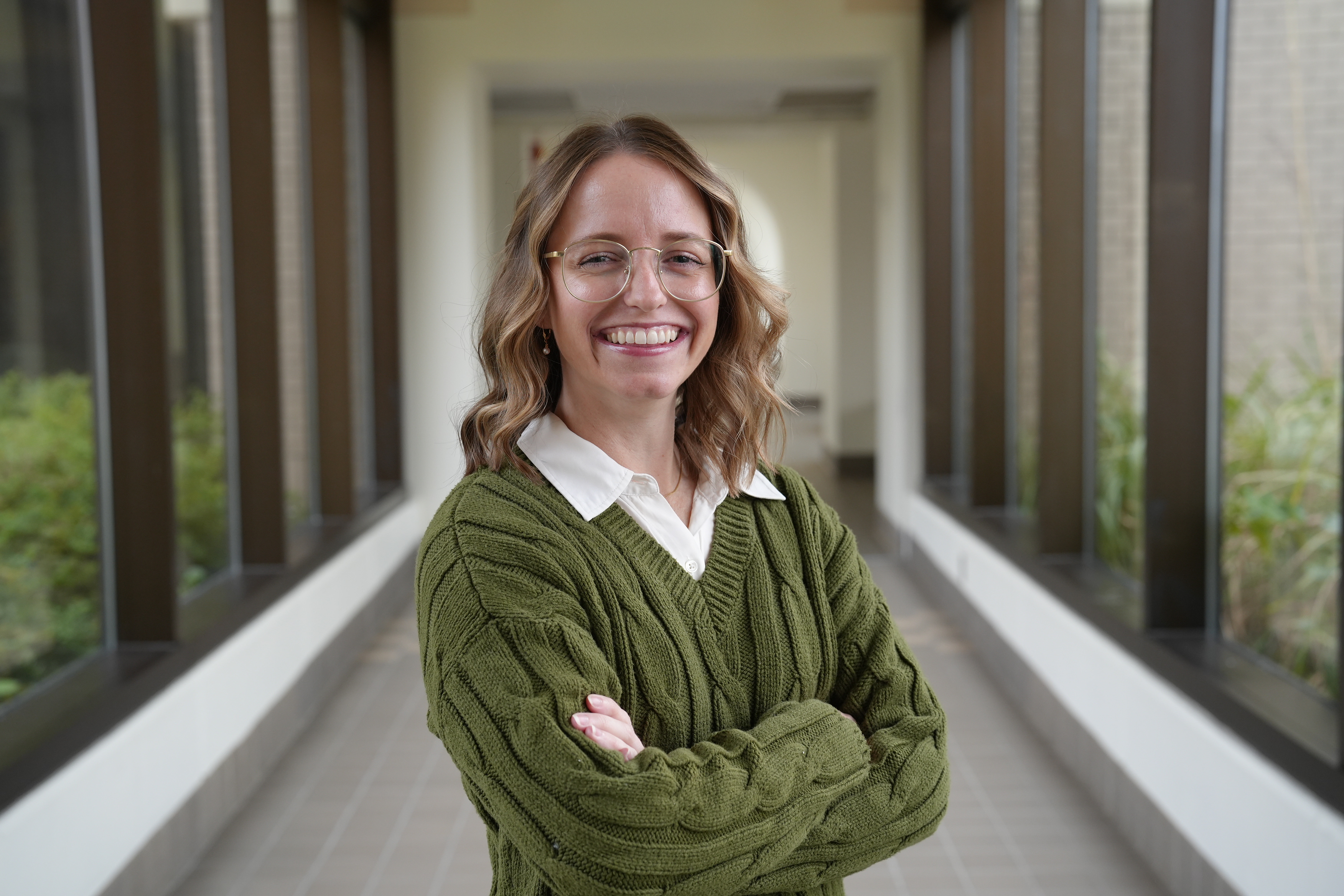
Angeline Bottera is the Associate Director at the Center for the Advancement of Research on Eating Behaviors and an assistant research professor at the Life Span Institute focused on developing accessible interventions for individuals with co-occurring sleep conditions and eating disorders.
Q: Tell us about your role at the Life Span Institute.
As the associate director of our center, I have my hands in a little of everything, including being the “boots on the ground” for overseeing the breadth of ongoing projects we have within the center and providing trainings in diagnostic assessments and eating disorder care. This includes training and supervising coordinators and graduate students for our eating disorder treatment trials. I really enjoy these opportunities for mentorship and training new scientists and clinicians. I’m also particularly excited to be conducting a pilot study on a novel mobile-health intervention I developed for treating binge eating through a circadian lens.
Q: What are you most proud of in your work?
I’m particularly proud of our team’s dedication to team science. It is a true joy to work alongside the CARE team members who are all dedicated to improving diagnosis, assessment, and treatment of eating disorders. Our team is highly focused on increasing access to care, which is something I care deeply about. Through our treatment trials, we work with digital tools to minimize barriers to accessing care. Through our assessment studies, we aim to refine assessment tools to better capture the experiences of underrepresented groups and ensure less people slip through the cracks. I am proud to be a part of this mission in improving both eating disorder identification and access to care.
Q: What prepared you for this work?
I trained a mouse how to ring a bell in my psychology class in high school, and have been fascinated by behavior change ever since. I developed my passion for eating disorders research through my undergraduate research experience at Trinity University in Texas. There, I worked with Dr. Carolyn Becker as she developed and refined the Body Project, an eating disorders prevention program that is now disseminated internationally. I went on to complete my PhD in Clinical Psychology at the University of Wyoming under the mentorship of Dr. Kyle De Young. My graduate training is where I identified a passion for exploring mechanisms that drive eating disorder behaviors, bringing me to my interest in circadian rhythm disruptions and their role in the onset and maintenance of eating disorder behaviors. As a field, we do not currently tackle circadian rhythms in eating disorder treatments, which is where some of my current work comes into play.
Importantly, before joining the CARE team, I completed my internship/residency training at West Virginia University School of Medicine/Charleston Area Medical Center under the supervision and mentorship of Dr. Jessica Luzier and my postdoctoral fellowship with the Midwest T32 Eating Disorders Program at the University of Chicago under the supervision and mentorship of Drs. Jennifer Wildes and Carol Peterson. These experiences played a pivotal role in preparing me for my work with CARE, shaping the clinical, research, and leadership skills I continue to refine today.
Q: What is unexpected or misunderstood in your area?
We are still learning about the role of sleep and circadian rhythms, broadly, in the development and maintenance of eating disorders. As mammals, we all have circadian rhythms that operate on roughly a 24-hour cycle. These rhythms regulate many biological processes, including hormone release and signals that influence appetite, which helps explain how disruptions in one system may affect the other. When circadian rhythms are misaligned, sleep is often one of the first areas impacted, and people may not function as well as they otherwise would. When sleep is funky, eating is often funky as well. For example, someone may stay up late one night and wake up later in the morning and skip their typical breakfast. In our sample of college students with eating disorders, 66% showed clinically significant insomnia symptoms, which is substantially higher than what we would expect in the general population. Although some sleep problems improve with eating-disorder treatment, many persist even after treatment ends and may even serve as a risk factor for eating disorder relapse. This is where some of my work comes in to tackle both sleep and eating disruptions together, rather than as separate entities.
Q: Who do you hope is helped through your work?
I’ve really become invested in the use of mobile health (such as apps that provide specialty treatment content) to meet people where they are. When I was in Wyoming, the only access to eating disorder care in the state was at the university. We treated a lot of pretty severe cases on an outpatient level because there were no other options for people. In West Virginia, I had many clients that would drive over an hour to receive services. This highlights a significant problem with access to eating disorder care. So, I’m interested in bridging this gap through the use of technology and understanding how we can help reduce the barriers to care. Further, for many people – approximately 50% of those who can access treatment – current eating disorder treatments are not effective. Overall, I hope to bring novel and effective treatments to people who do not have access to care and for whom current treatments may not work.
Q: Who are you when you’re at home?
At home, I’m someone who really values quality time with loved ones. I love being outside, especially going for walks or hikes with my husband, Hunter, and our dog, Meli. We will even be adding a stroller to our walks soon as we welcome our newest addition to the family this spring. When home, I enjoy cozy, low-key activities like playing games—cribbage and backgammon are favorites. I also have a few hobbies that I really enjoy—crocheting has become a recent favorite, and one of my longstanding hobbies is baking. From cookies and pies to cakes and dessert bars, I love to create something delicious to share with friends and family.