How Early Feedback Loops Drive Your Child’s Language
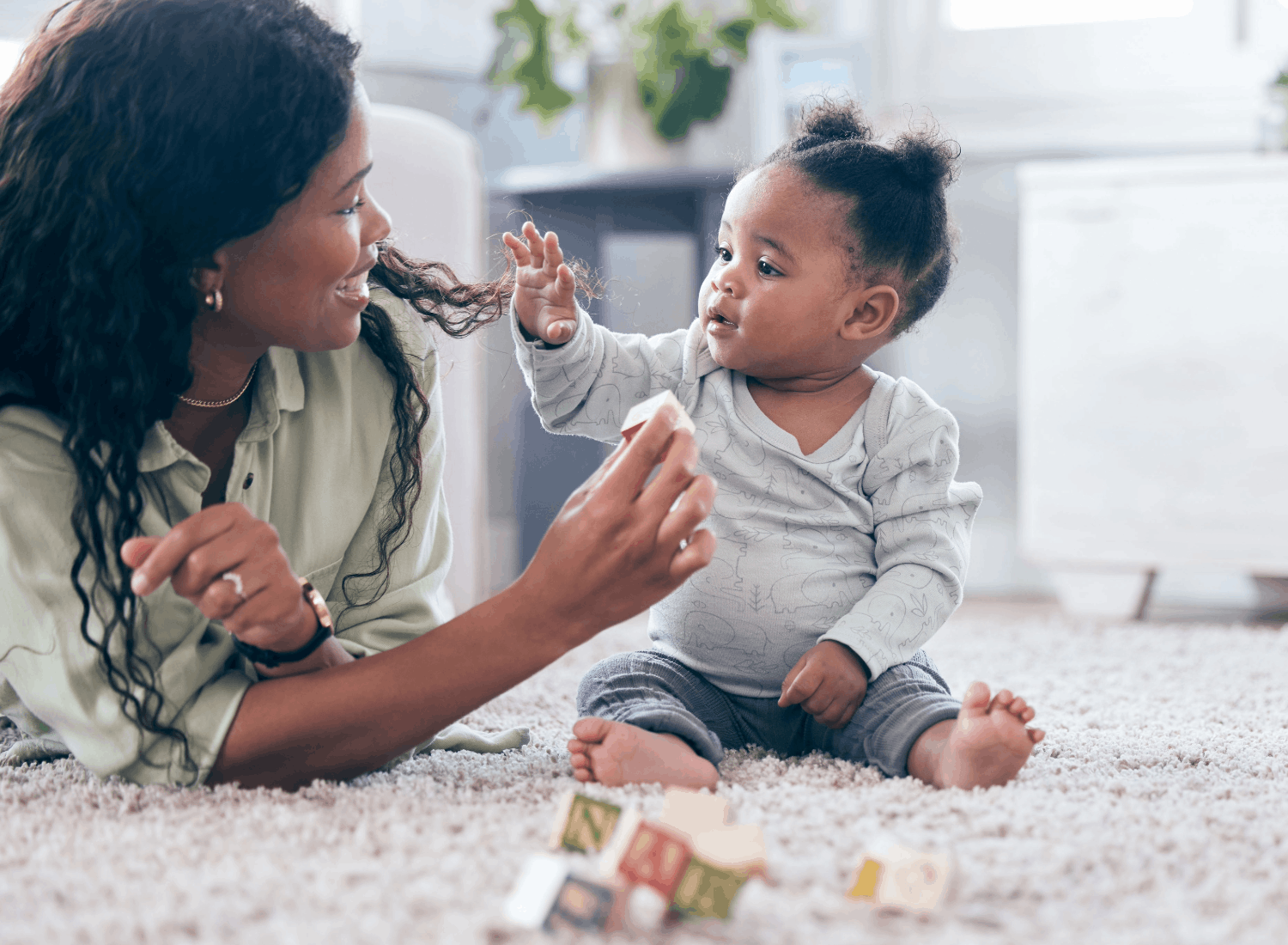
Ever wonder what a baby’s babbles mean? That back-and-forth interaction is the engine of language development.
A research team led by Nancy Brady, a speech-language-hearing professor and scientist at KU, developed methods to track these early "feedback loops" more accurately. She recently used a tool in a study to compare communication complexity among infants with three different syndromes — Down, Angelman and Fragile X.
"We're really trying to figure out where kids are getting stuck, if you will, on that developmental path towards language so we can intervene earlier and more effectively,” said Brady, who is also exploring language complexity among toddlers with autism.
The research is one way we're learning how to better support every child’s unique path to communication.
Here are three ways to encourage a child's early language development, from Brady's research:
- Look for the "Communication Trifecta": The strongest sign of early communication is when your baby combines a sound (babbling), a gesture (reaching/pointing), and eye contact with you all at once.
- Engagement Matters More Than Toys: If your child is babbling while playing but not looking at you to share the moment, they may be missing a key piece of the communication "feedback loop."
- Early Action is Key: These "pre-speech" behaviors are the building blocks for first words. Recognizing where a child might be stuck allows for earlier and more effective support.